

Table of Contents
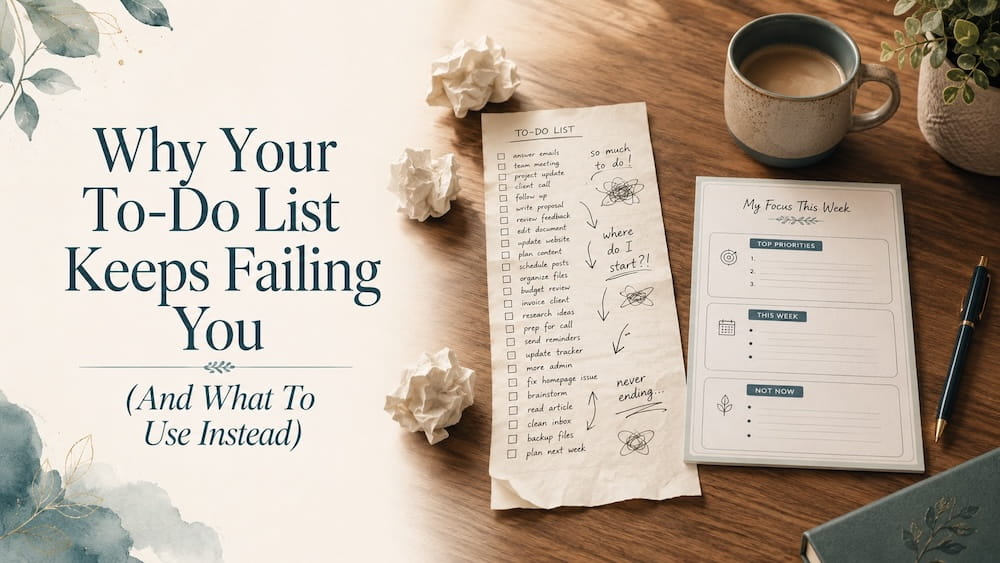
Most to-do list systems don’t fail because you are lazy.
They fail because they quietly become storage units for unfinished decisions.
You keep adding tasks.
Your brain keeps carrying them.
And eventually, the list stops helping and starts judging you.
I have tried all versions over the years:
- giant planners
- productivity apps
- color-coded systems
- complicated trackers
Some worked for a few days.
Most became another thing to maintain.
What finally helped was not finding a “better productivity hack.”
It was building a simpler to-do list system that reduced friction, instead of creating more of it.
The Real Problem With Most To-Do Lists
Most lists are built around one question:
“What do I need to remember?”
But execution works better when the question becomes:
“What can I realistically move forward today?”
That sounds small. It isn’t.
A traditional list usually becomes:
- too long
- emotionally heavy
- unrealistic
- disconnected from actual energy and time
And then something predictable happens.
You start rewriting the same tasks every day.
That is not productivity.
That is administrative guilt.
If your tasks keep getting scattered between your mind, notes, messages, and reminders, a simple task app can help – but only if it makes capture easier, not heavier.
I recently tested Todoist for everyday tasks and life admin, including recurring tasks, reminders, subtasks, and quick scheduling.
Why To-Do Lists Become Overwhelming
Here is what usually goes wrong.
1. Everything looks equally urgent
- Reply to the email.
- Book a dentist appointment.
- Finish proposal.
- Buy batteries.
Your brain sees one giant pile instead of clear priorities.
2. The list keeps growing faster than it shrinks
This creates low-level mental pressure all day.
Even when you are resting, part of your brain is still scanning unfinished tasks.
3. The system depends too much on motivation
A complicated system works only when you feel energetic.
Simple systems work even when you don’t.
That is a huge difference.
What Finally Worked For Me
I stopped trying to build the perfect productivity setup.
Instead, I built a lightweight to-do list system based on clarity and energy.
I now divide tasks into only 3 buckets.
Must Do
The few things that actually move life or work forward.
Usually 1–3 items.
Not 17.
Nice To Do
Helpful tasks, but not critical.
These get done only if time and energy allow.
Reset Later
Things that matter eventually, but not today.
This removes guilt without losing visibility.
That one shift alone made planning feel lighter.
My Rule: Fewer Tasks, More Completion
I have noticed something interesting.
People often overestimate how much they can do in a day…
and underestimate how draining constant task-switching is.
Now I plan smaller on purpose.
Because finishing 3 meaningful things feels better than carrying 19 unfinished ones into tomorrow.
The Tools I Actually Use
Over time, I have realised that the simpler the tools, the more sustainable they are.
So I usually use:
- a small A6 notebook
- sticky notes
- a basic weekly planner
- sometimes just plain paper
That is it.
As I said… the simpler the system, the easier it is to return to consistently.
(And yes, I have abandoned enough productivity apps to qualify for emotional damages.)
A Simple Shift That Helps Immediately
Instead of writing endless task lists, try this tomorrow:
Write:
- 2 Must-Do tasks
- 2 Nice To-Do tasks
- 1 Reset Later item
Try this first.
You may be surprised how much calmer your brain feels.
Final Thought
A good system should reduce mental clutter, not create more of it.
Most people don’t need a more advanced planner.
They need less friction between intention and action.
And honestly, that is true for more than just productivity.
Related Posts
- My Weekly Planning System That Actually Gets Used
- How I Stay Consistent Without Motivation
- How I Simplified My Daily Routine
- My Weekly Reset Routine
* This post may contain affiliate links. If you buy through them, I may earn a small commission at no extra cost to you.